Causes of Accidents and Prevention Strategies for Nigerian Students
Causes of Accidents and Prevention Strategies for Nigerian Students
Every term, I see students struggle to define accidents correctly in their Civic Education or Social Studies exams. It is not enough to just say “it is bad luck.” Whether you are preparing for your Junior WAEC (BECE) or your SSCE, understanding the cause of accident and the different types of accident is critical for your success.
Let’s be honest, safety is not just for passing exams; it is for survival on our busy roads and in our homes. This note covers everything you need to know, straight from the syllabus.

Meaning of Accident
An accident is a sudden, unexpected, and unplanned event that results in injury, death, or damage to property. This is the standard definition you must write in your exam.
Think of an accident like an uninvited guest. You did not cook for them, you did not call them, but they show up suddenly to cause confusion. It happens when we least expect it. An accident is never intentional; if someone plans to hurt another person, that is a crime, not an accident.
Types of Accidents
Accidents are generally classified based on the location where they occur. We encounter different hazards depending on our environment.
-
Home Accidents: These occur within the house or compound. Common examples include burns from hot water in the kitchen, cuts from sharp knives, or falling on a slippery tiled floor.
-
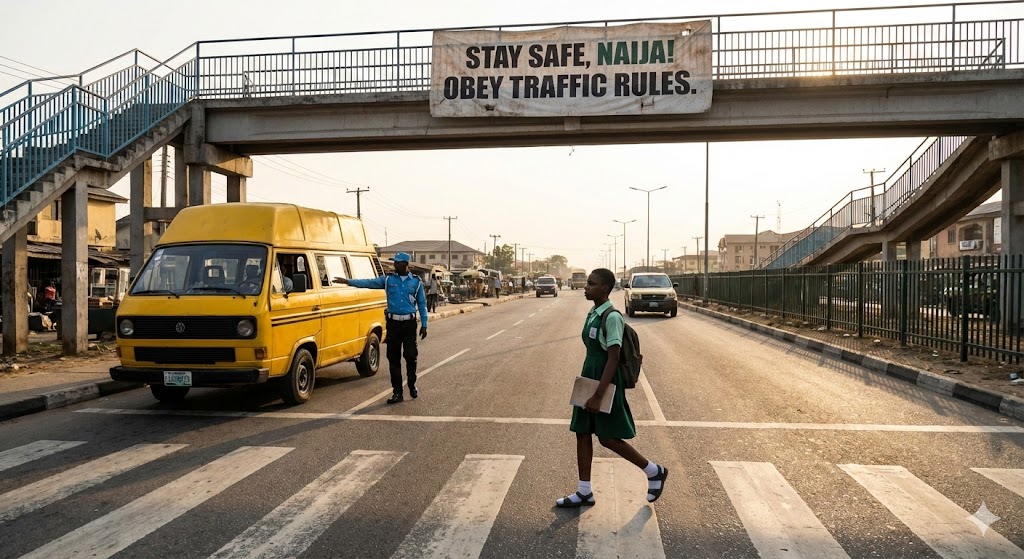
Road Accidents: These happen on the highway or streets involving vehicles, pedestrians, or animals. In Nigeria, this is the most common type we see daily.
-
School Accidents: These happen within the school premises. It could be a student falling on the playground during break time or getting injured in the science laboratory.
-
Workplace Accidents: These occur in factories, offices, or construction sites. For example, a bricklayer falling from a ladder.
-
Air and Water Accidents: These involve planes crashing or boats capsizing, though they are less common than road accidents.
Causes of Accidents
Accidents do not just happen; they are caused by specific factors. We categorize these causes into three main groups: human errors, mechanical faults, and environmental factors.
Human Factors
Human error is the leading cause of accidents in Nigeria. This refers to mistakes made by people due to carelessness, ignorance, or disobedience.
-
Over-speeding: Many drivers believe they are in a Formula 1 race. Speed kills.
-
Disobedience to Rules: Ignoring traffic lights or safety signs.
-
Fatigue: Driving or working when you are extremely tired.
-
Alcohol and Drug Abuse: This impairs judgment. I always tell my students, “Don’t drink and drive.”
-
Distraction: Using a mobile phone while driving or operating heavy machinery.
Teacher’s Analogy: Think of the “Danfo” driver who is counting money, shouting at a passenger, and driving at top speed all at the same time. That is a human factor disaster waiting to happen.
Mechanical Factors
These are accidents caused by faulty equipment or vehicles.
-
Brake Failure: When a vehicle’s braking system stops working.
-
Burst Tyres: Using expired or worn-out tyres (tokunbo tyres) that cannot withstand heat.
-
Electrical Faults: faulty wiring in a house can lead to fire accidents.
Environmental Factors
These are caused by the condition of the surroundings or weather.
-
Bad Roads: Potholes and uneven surfaces are major issues in our country.
-
Poor Weather: Heavy rain can make roads slippery and reduce visibility.
-
Poor Lighting: working or driving in dark areas without streetlights.
According to the Federal Road Safety Corps (FRSC), road traffic crashes are significantly higher during festive periods due to a combination of these factors.
Effects of Accidents on the Victim
The consequences of an accident are always negative and can be life-changing.
-
Injury or Death: This is the most painful effect. Victims may suffer fractures, burns, or lose their lives.
-
Loss of Property: Vehicles are destroyed, houses are burnt, or valuable items are damaged.
-
Financial Loss: Money meant for school fees or food is spent on hospital bills and repairs.
-
Psychological Trauma: The shock and fear after an accident can stay with a person for years (PTSD).
-
Disability: Some accidents result in permanent loss of body parts, affecting the victim’s future.
Prevention of Accidents
Preventing accidents requires discipline and adherence to safety rules. As the old saying goes, “Prevention is better than cure.”
-
Safety Education: Students and citizens must be taught how to use roads and equipment safely.
-
Obeying Rules and Regulations: Drivers must obey traffic lights, and students must follow lab rules.
-
Maintenance: Regular servicing of vehicles and machines prevents mechanical failure.
-
Use of Safety Gear: Wearing seatbelts in cars, helmets on motorcycles, and boots in factories.
-
Good Infrastructure: The government should repair bad roads and provide street lights.
For more global statistics on how safety gear saves lives, you can check the World Health Organization (WHO) Road Safety page.
First Aid Basics for Students
This section often separates the ‘A’ students from the ‘C’ students. Knowing what to do after an accident is just as important as knowing the causes.
First Aid is the simple, immediate help given to an injured person before a doctor arrives.
-
The Goal: To save life, prevent the condition from getting worse, and promote recovery.
-
The ABC Rule: Check for Airway, Breathing, and Circulation.
-
Bleeding: Apply pressure to the wound with a clean cloth. Do not use dirty rags.
Conclusion
Understanding the cause of accident and types of accident is not just about writing notes; it is about keeping yourself safe. Make sure you memorize the three main causes (Human, Mechanical, Environmental) because WAEC examiners love asking for them. Stay safe out there.