
5 Real Reasons Why Did Nigeria Change From 6 3 3 4 to 9 3 4? (A Complete Guide for Students and Parents)
Have you ever wondered what happened to the old school system your older cousins talk about? It gets confusing quickly. You hear terms like Junior Secondary School, Basic 7, and primary six leaving certificates thrown around constantly. Why did Nigeria change from 6 3 3 4 to 9 3 4? This blog post answers that exact question plainly. I will walk you through the actual reasons behind the government’s shift, how it directly affects your WAEC and NECO preparation, and what the Universal Basic Education policy means for your family today. We will clear up the confusion so you can focus on studying smart.

Before You Begin: Understanding the Numbers
The numbers represent years spent in educational tiers. The 6-3-3-4 system meant six years of primary, three of junior secondary, three of senior secondary, and four of university. The 9-3-4 model merges primary and junior secondary into a single, continuous nine-year basic education block, followed by three years senior and four years tertiary.
Parents often ask me to break this down during PTA meetings here in Ikorodu. It looks like a massive overhaul, but it is basically a repackaging. Look at this quick comparison to see how the years line up:
| School Level | Old System (6-3-3-4) | New System (9-3-4) |
| Primary School | Years 1 to 6 | Basic 1 to 6 |
| Junior Secondary | JSS 1 to 3 | Basic 7 to 9 |
| Senior Secondary | SSS 1 to 3 | SSS 1 to 3 |
| University/Polytechnic | 4 Years | 4 Years |
1. Making Education Free and Compulsory
The Nigerian government adopted the 9-3-4 system to enforce the Universal Basic Education Act of 2004. This law makes the first nine years of schooling completely free and compulsory for every Nigerian child. It legally prevents parents from withdrawing children after primary six to start hawking or petty trading.
In my years of helping SS3 students prepare for WAEC, I noticed a huge difference in retention. Before this law, many bright kids vanished after primary school. When someone asks you why did Nigeria change from 6 3 3 4 to 9 3 4?, point right to the dropout rates. The government needed a legal way to keep children in classrooms until they were at least fifteen years old.
2. Meeting Global Literacy Goals
The shift aligned Nigeria with the United Nations Millennium Development Goals and the Education For All initiative. Global standards demanded a longer period of uninterrupted basic learning. Extending compulsory education to nine years helped the country secure international educational grants and improve baseline national literacy rates significantly.
Nigeria does not exist in a bubble. According to the Universal Basic Education Commission (UBEC), our policies must match global expectations. The world realized that six years of reading and writing just wasn’t cutting it anymore. Nine years builds a solid foundation.
3. Boosting Early Vocational Training
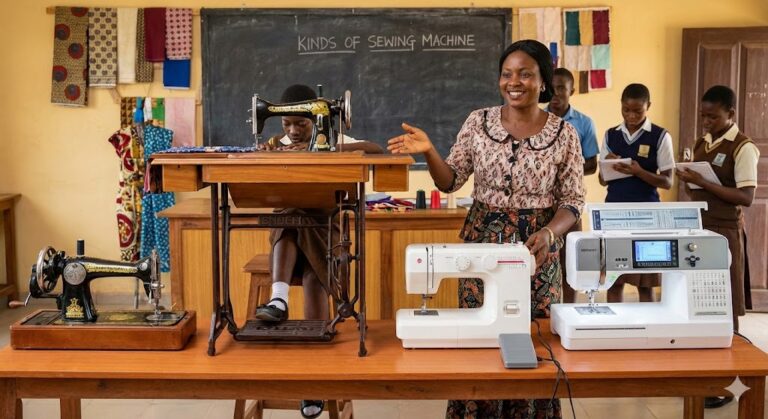
The 9-3-4 structure integrates prevocational subjects like Basic Technology and Home Economics seamlessly into the nine-year curriculum. Instead of treating JSS as a separate jump, it acts as a continuation of primary school. This ensures students acquire practical survival skills before they even face senior secondary exams.
Not every student wants to become a doctor or a lawyer. The new system respects that reality. It forces schools to introduce practical skills earlier in a child’s life.
Here are the core practical subjects introduced under the 9-year block:
-
Basic Technology (Woodwork, metalwork, drawing)
-
Business Studies (Typing, basic accounting)
-
Home Economics
-
Agricultural Science
So, why did Nigeria change from 6 3 3 4 to 9 3 4? To make sure that even if a student stops at Basic 9, they have a trade or a skill to survive in the real world.
4. Eliminating the Primary Six Hurdle
Under the old model, the Primary School Leaving Certificate exam caused massive anxiety and forced many rural students out of the system entirely. The new framework scraps that barrier. Students now transition smoothly from Primary 6 to Basic 7 without needing a high-stakes exit exam to prove their basic worth.
Think about how stressful exams are. Now imagine putting that pressure on an eleven-year-old child just to let them enter JSS1. It was cruel. By merging primary and junior secondary, that terrifying middle-step vanished. You simply move into Basic 7 and keep learning.
5. Streamlining Senior Secondary Focus
By consolidating the first nine years, educational boards standardized the Basic Education Certificate Examination at year nine. This allows senior secondary schools to focus exclusively on three years of intense specialized preparation for WAEC, NECO, and JAMB, separating arts, commercial, and science students much more effectively.
This is my favorite part as a teacher. Because the basic stuff is completely handled by the end of Basic 9 (JSS3), we get to treat SSS1 to SSS3 purely as career preparation.
Here is how you should handle your senior secondary years:
-
SSS1: Discover your strengths. Pick between Arts, Science, or Commercial based on your Basic 9 results.
-
SSS2: Master the WAEC syllabus. Do not wait for your final year to start reading past questions.
-
SSS3: Focus entirely on exam strategy, JAMB mock tests, and finalizing your university applications.
Wrapping Up Your Study Strategy
Now you know exactly why did Nigeria change from 6 3 3 4 to 9 3 4? It was never about confusing you. It was about keeping you in school longer, giving you practical skills, and matching what the rest of the world is doing. Embrace the system. Take your Basic Education Certificate Examination seriously, because it sets the entire tone for your senior secondary success.

One Comment