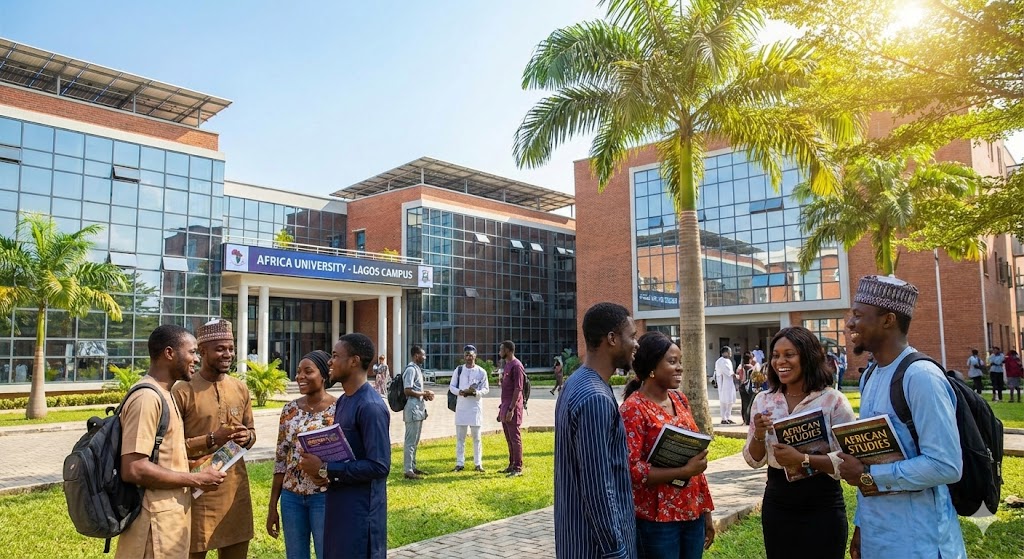
What is the most educated tribe in Northern Nigeria?
Have you ever found yourself in a heated debate about Nigerian demographics? It happens often. People frequently make sweeping generalizations about education across the country.
The northern region is vast and incredibly diverse. Finding exact answers can be stressful when data is buried in heavy reports. If you are asking, “What is the most educated tribe in Northern Nigeria?”, you are exactly where you need to be.
This article will break down the facts, the history, and the current realities of education across the region. Stop guessing and let the data do the talking.
Quick Summary
-
The Middle Belt region holds the highest concentration of Western-educated individuals in the North.
-
Tribes like the Tiv, Idoma, Igala, and Northern Yoruba boast the highest per capita literacy rates.
-
The Core North has a deep, centuries-old foundation in Islamic scholarship.
-
Historical factors, heavily influenced by early Christian missionaries, created the current educational gaps.
-
Modern tech hubs and digital skills are rapidly changing the northern educational landscape.
Why is northern education a major topic?
Education in Nigeria is a massive talking point. It shapes politics, economy, and national development.
What are the current literacy rates?
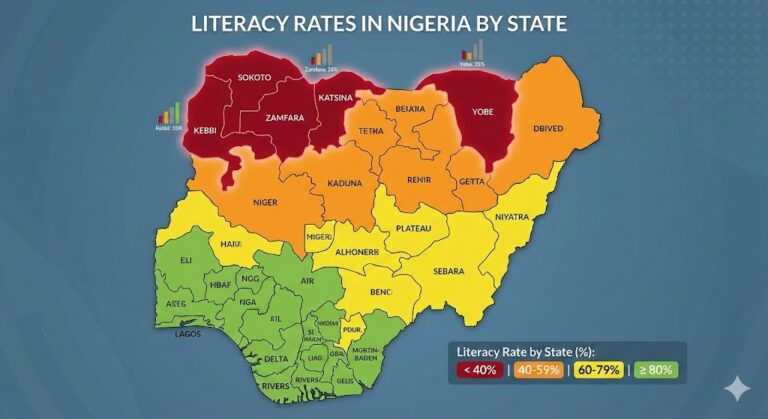
The numbers tell a clear story. Nationally, adult literacy in Nigeria hovers around 62%. However, this is not evenly distributed.
According to data from the National Bureau of Statistics (NBS), southern states frequently record literacy rates above 80%. In contrast, several states in the North-West and North-East report literacy rates between 30% and 40%. This stark contrast makes northern education a constant subject of national planning.
How does the North compare to the South?
The South embraced Western education much earlier. Coastal access allowed early contact with European missionaries who built schools.
The North had a completely different historical trajectory. They already possessed a highly organized system of Islamic education long before the British arrived. Today, this historical difference still echoes in the formal Western education statistics.
Who makes up Northern Nigeria?
You cannot treat the North as a single entity. It is a massive landmass with hundreds of distinct ethnic groups. To answer what is the most educated tribe in Northern Nigeria? accurately, we must split the region.
Who lives in the Core North?
The Core North generally refers to the North-West and North-East geopolitical zones. This area is predominantly home to the Hausa, Fulani, and Kanuri people.
These groups form the majority population of the entire northern region. Their cultural and religious influence heavily shapes the identity of the Core North.
Who lives in the Middle Belt?
The Middle Belt roughly translates to the North-Central geopolitical zone. It includes states like Benue, Plateau, Kogi, and Kwara.
This area is a melting pot of minority tribes. It is also the region that produces the highest number of Western-educated graduates in the North.
What is the most educated tribe in Northern Nigeria?
This is the big question. When people ask, “What is the most educated tribe in Northern Nigeria?”, they are usually looking for per capita statistics regarding Western education.
Are the Yoruba in Kwara and Kogi leading?
Yes, they are major contenders. The Yoruba people indigenous to Kwara and Kogi states have incredibly high literacy rates.
They share the same heavy emphasis on education as their southern kin. It is very common to find multiple university graduates and professors within a single family here.

How educated are the Tiv and Idoma?
The Tiv and Idoma tribes of Benue State are highly educated. Benue is consistently one of the most educationally advanced states in the entire North.
Both tribes have a massive presence in federal universities, the civil service, and the military. They aggressively pursue higher education.
What about the Igala and Ebira?
Kogi State is another educational powerhouse. The Igala and Ebira tribes place a massive premium on schooling.
These groups produce a high volume of professionals in medicine, law, and engineering. Their proximity to the South allowed for earlier integration of Western school systems.
Are minority tribes in Southern Kaduna highly educated?
Absolutely. Southern Kaduna is home to tribes like the Bajju, Atyap, and Jaba.
These groups boast some of the highest concentrations of Western-educated individuals in the North-West. They have heavily utilized education as a tool for socioeconomic advancement.
How educated are the Hausa and Fulani?
It is a mistake to view education strictly through a Western lens. The Hausa and Fulani have a profound intellectual history.
How did Islamic education start?
Long before colonial rule, the Sokoto Caliphate was a hub of learning. Scholars read, wrote, and governed using Arabic and Ajami.
This deep-rooted system produced scholars, judges, and administrators. It remains a massive part of the cultural fabric today.
Is Western education growing in the core North?
Yes, it is growing fast. While their percentage per capita might be lower, their sheer population size changes the math.
The Hausa-Fulani produce hundreds of thousands of university graduates annually. They have a massive and growing presence in every professional sector globally.
Why do education levels differ among northern tribes?
You have to look at history to understand the present. The variations in literacy did not happen by accident. When figuring out what is the most educated tribe in Northern Nigeria?, history provides the map.
Did early missionaries impact literacy?
Christian missionaries were the primary drivers of early Western education in Nigeria. They settled heavily in the Middle Belt and Southern Kaduna.
They built schools and hospitals alongside churches. The tribes in these areas naturally gained a massive head start in Western literacy.
How did British colonial policies affect the North?
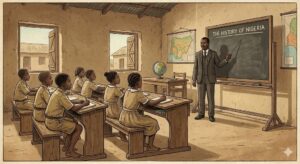
The British implemented a system called “Indirect Rule.” To keep the peace, they promised the Emirs they would not interfere with the Islamic religion.
This meant Christian missionaries, and their schools, were largely kept out of the Core North. This policy created an educational gap that the region is still working to close today.
What are the biggest educational challenges?
The region still faces severe hurdles. Acknowledging these issues is the first step toward fixing them.
Why are there so many out-of-school children?
The numbers are alarming. According to UNICEF, Nigeria has millions of out-of-school children, with the vast majority located in the North.
This is driven by a complex mix of systemic issues. Lack of infrastructure and insufficient funding play huge roles.
How does poverty affect education?
Poverty is a massive roadblock. When families struggle to eat, school fees and uniforms become impossible luxuries.
Many children are forced into street hawking or farming to help their families survive. Economic survival simply overrides the desire for schooling.
What is the truth about girl-child education?
Cultural norms and early marriage have historically kept girls out of the classroom. However, the narrative is shifting.
There is a massive modern push by leaders and parents to keep northern girls in school. Educating a girl transforms the entire community’s economic future.
How has insecurity affected schools?
This is arguably the biggest immediate threat. Insurgency in the North-East and banditry in the North-West have devastated the education sector.
Thousands of schools have been forced to close for safety. It is hard to focus on learning when basic security is missing.
Which northern states lead in education?
Looking at state data gives a clear picture. The geographic divide is very obvious here.
Why do Middle Belt states rank higher?
States like Kwara, Kogi, and Benue consistently output high numbers of WAEC passes. They also generate a massive volume of JAMB applications each year.
This is due to the historical head start we discussed earlier. The cultural expectation in these states is that a child must go to school.
Where are the top universities located?
The North is home to some of Nigeria’s oldest and most respected universities. Ahmadu Bello University (ABU) in Zaria is a massive intellectual hub.
The University of Ilorin and the University of Jos also attract thousands of students annually. These institutions are bridging the gap and producing world-class talent.
How is education changing in the North today?
The future is not perfectly mirrored by the past. The region is actively evolving.
Are digital skills and tech hubs growing?
Tech is completely changing the game. Young northerners are bypassing traditional barriers through the internet.
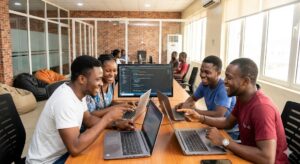
Coding camps, digital marketing classes, and tech hubs are springing up in Kano, Kaduna, and Jos. Tech literacy is becoming the new gold standard.
What are the government and NGOs doing?
There is a coordinated effort to fix the gaps. Universal Basic Education (UBE) interventions are building new classrooms and training teachers.
International grants are specifically targeting the integration of formal subjects into traditional Almajiri schools. Progress is slow, but it is happening.
Final thoughts on the most educated tribe
It is time to wrap up the facts. We have looked at the numbers, the geography, and the history.
What is the final verdict?
If you are strictly measuring Western education per capita, the Middle Belt tribes take the lead. The Tiv, Idoma, Igala, and Northern Yoruba are the answers to what is the most educated tribe in Northern Nigeria?.
However, by sheer volume of graduates, the Hausa-Fulani produce an incredibly large educated workforce. Both regions contribute massively to the nation’s intellectual pool.
What does the future hold?
The educational gap across the region is actively closing. With the rise of digital learning and aggressive government interventions, the next decade will look very different. Learn to look beyond the stereotypes and appreciate the rapid growth happening right now.