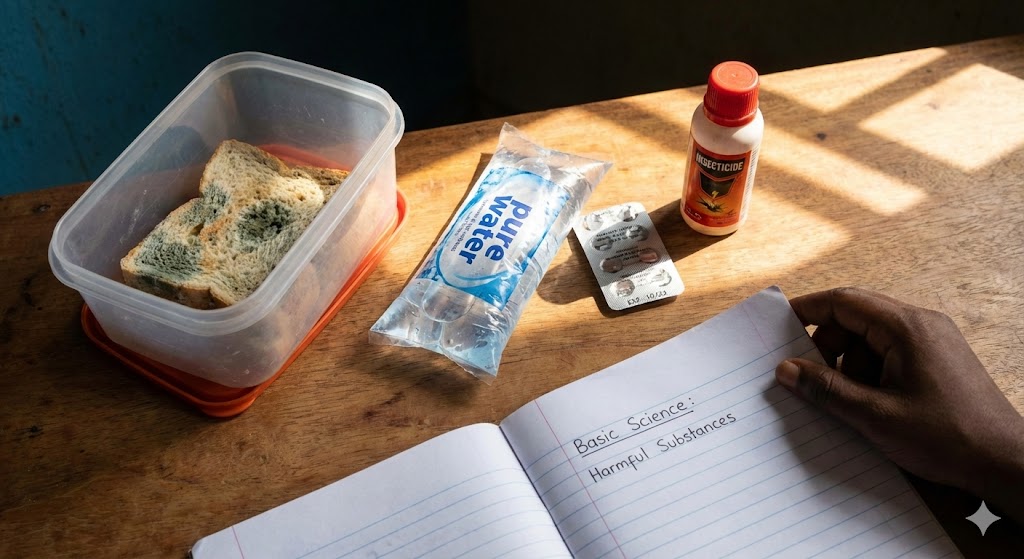
What Are Harmful Substances? Full Note for Basic Science Students
What Are Harmful Substances? Full Note for Basic Science Students
Let’s be honest, this is one of the easiest topics in Basic Science, yet students still lose marks on it. Why? Because you assume it is just about “hard drugs” like cocaine. It is not.
If you eat rice that has been in the pot for three days without warming, you have consumed a harmful substance. If you drink “pure water” that has been under the sun for too long, you are taking in chemicals from the plastic.
In this note, we will break down exactly what are harmful substances, how they get into your body, and the damage they cause. This is a common question in the JSSCE and WAEC exams, so pay attention.
Meaning of Harmful Substances
Harmful substances are materials that cause injury, sickness, or death to living things when they are eaten, inhaled, or touched.
Think of your body like a generator. If you pour clean fuel into a “Gen,” it runs smoothly. But if you pour fuel mixed with water or kerosene (adulterated fuel), the engine will knock and eventually spoil. That is exactly what harmful substances do to the human body. They disrupt the normal way your organs function. These substances can be foods, drugs, fruits, or liquids that are unfit for consumption.
Examples of Harmful Substances
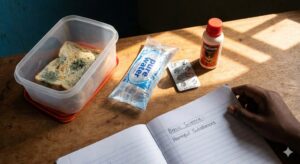
Common examples include stale food, expired drugs, poisonous chemicals, and impure water.
You see these things every day in Nigeria. It is vital to identify them so you do not mistakenly put them in your mouth.
-
Stale Food: This is food that has gone bad due to bacteria or fungi. For example, soup that has soured or bread with green mold on it.
-
Expired Drugs: Every medicine has a shelf life. Taking Panadol or malaria drugs after the expiry date turns the medicine into poison.
-
Impure Water: Water that contains germs or chemical waste. In many areas, tie-nylon water that is not treated properly falls into this category.
-
Chemicals: This includes insecticides (like Sniper), herbicides, and cleaning agents like bleach when mishandled.
-
Alcohol and Tobacco: While these are legal for adults, they damage the lungs and liver over time.
Ways Harmful Substances Enter the Body
These dangerous materials get into our systems primarily through swallowing, breathing, skin contact, or injection.
We often think we are safe if we don’t eat something, but that is wrong. Your skin and nose are open doors too.
-
Ingestion (Eating/Drinking): This is the most common way. It happens when you eat contaminated food or drink dirty water.
-
Inhalation (Breathing): This happens when you breathe in smoke, fumes from a generator, or dangerous gas. The substance goes straight to your lungs and then your blood.
-
Absorption (Through Skin): Some chemicals are so strong they pass through your skin. If you touch strong acid or certain pesticides without gloves, it enters your bloodstream.
-
Injection: This is when substances are forced directly into the blood using a needle or sharp object (like a snake bite or a dirty syringe).
Health Consequences of Harmful Substances
The effects range from minor stomach upset to permanent organ damage or death.
Just like one rotten tomato can spoil a whole pot of stew, one harmful substance can ruin the balance of your entire body. According to the World Health Organization (WHO), unsafe food containing harmful bacteria, viruses, parasites, or chemical substances causes more than 200 diseases.
-
Gastrointestinal issues: Vomiting, diarrhea (running stomach), and stomach pain.
-
Respiratory problems: Coughing, difficulty breathing, and lung cancer (especially from tobacco smoke).
-
Organ Failure: Long-term exposure to things like alcohol destroys the liver (liver cirrhosis) and kidneys.
-
Mental Disorders: Hard drugs affect the brain, leading to hallucinations or “madness.”
-
Death: In severe cases, such as drinking strong acid or an overdose of drugs, death can happen instantly.
Measures to Prevent Intake of Harmful Substances
Prevention involves checking labels, maintaining hygiene, and avoiding unknown substances.
You are the security guard of your own body. You must inspect whatever wants to enter.
-
Check Expiry Dates: Before you buy biscuits, canned drinks, or drugs, look for the “EXP” date. If it has passed, throw it away.
-
Verify NAFDAC Numbers: In Nigeria, every safe product must have a NAFDAC registration number. No number? Do not buy it.
-
Proper Storage: Keep chemicals like kerosene and bleach far away from food items. Don’t store palm oil in a kerosene keg.
-
Avoid Self-Medication: Only take drugs prescribed by a doctor or pharmacist.
-
Maintain Hygiene: Wash fruits and vegetables thoroughly with salt water before eating to remove pesticides and dirt.
Extra Notes: The “Label” Rule
I always tell my students this: If you cannot read the label, do not eat the content. Many harmful substances come in containers with foreign languages or no labels at all. If you see a bottle on the table that looks like water but has no seal, smell it first. It might be spirit or chemical solution. Being curious without being careful is how many accidents happen in the laboratory and at home.
Conclusion
Understanding these dangers is the first step to staying healthy. For your exams, remember the four ways substances enter the body (Ingestion, Inhalation, Absorption, Injection) and be ready to give at least three examples of harmful items found in a Nigerian home. Good luck with your studies.






One Comment