What Are Ornamental Crops? Definition, Types, and Uses (Full Notes)
What Are Ornamental Crops? Definition, Types, and Uses (Full Notes)
Let’s be honest. When most students hear “Agriculture,” they immediately think of yam, cassava, or maize. They think only about food. But if you check your JSS3 or SS1 scheme of work, you will see a very specific topic that often trips students up in Section A of the exam. That topic is ornamental agriculture.
It is simple, but you need the right definitions to get your full marks.
So, what are ornamental crops? In this lesson, we will break down the meaning, types, and importance of these beautiful plants using examples you see every day on your way to school.

Meaning of Ornamental Crops
Ornamental crops are plants grown specifically for their beauty, decoration, and aesthetic value rather than for food or medicine. These plants are cultivated in gardens, parks, and homes to make the environment look attractive.
Think of ornamental crops like the makeup a lady wears. Rice and beans are necessary for survival, just like food. But ornamental plants are like the powder and lipstick; they might not fill your stomach, but they make the environment pleasant to look at. That is their main job. They are the “slay queens” of the plant kingdom.
In agricultural science, the study and cultivation of these flowers and decorative plants is called Floriculture.
Classification of Ornamental Plants
Agricultural scientists classify these crops based on their growth habits and their physical features. You generally cannot mix them up. A tree is not a shrub, and a shrub is not a creeper.
Here are the main categories:
Ornamental Trees
These are large, woody plants with a single main stem or trunk that grow very tall. You usually see them lining the streets or providing shade in school compounds.
-
Examples: Royal Palm, Casuarina, Delonix regia (Flamboyant tree), Neem tree (Dogonyaro).
Ornamental Shrubs
Shrubs are woody plants that are smaller than trees and have multiple stems rising from the ground. They are often used for fencing or “hedging” in Nigerian houses.
-
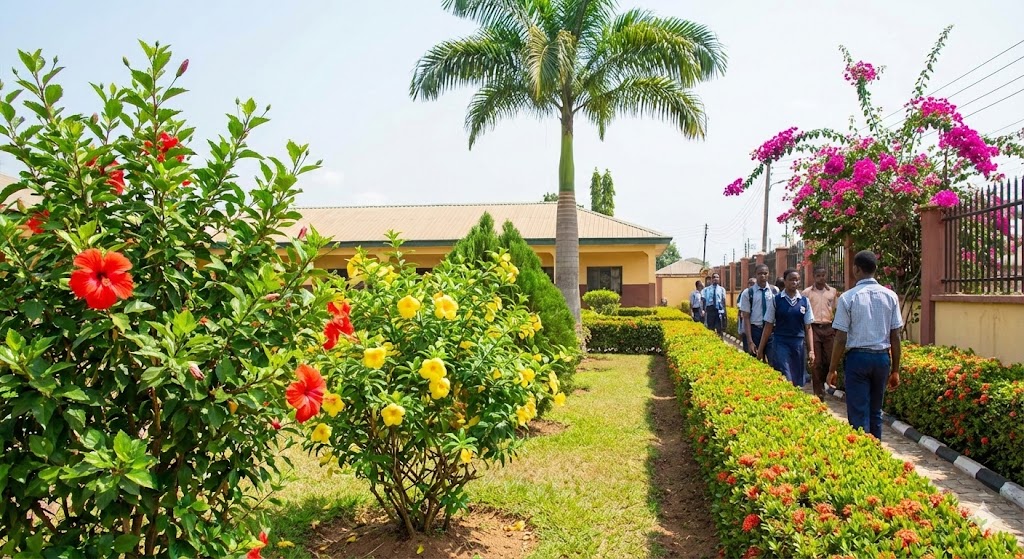
Examples: Hibiscus, Ixora, Pride of Barbados, Croton.
Ornamental Flowers (Bedding Plants)
These are soft-stemmed (herbaceous) plants grown mainly for their colorful blooms. Think of the “Aso-Ebi” analogy here. One flower alone might look lonely, but when you plant them in a group (a bed), they look uniform and beautiful, just like friends wearing the same cloth at a wedding.
-
Examples: Marigold, Zinnia, Sunflower, Canna lily.
Climbers and Creepers
These are plants with weak stems that cannot stand upright on their own and need support to grow. They usually climb on fences, walls, or other trees.
-
Examples: Bougainvillea, Morning Glory, Allamanda.
Teacher’s Note: You can read more about plant classification systems on Wikipedia’s Glossary of Plant Morphology if you need extra details for your project.
Common Examples of Ornamental Plants in Nigeria
Nigeria is blessed with a variety of decorative plants that thrive in our tropical climate. In your practical exam, you might be asked to identify specimens.
Here is a quick list of common ones you will see in Lagos, Abuja, or Port Harcourt:
-
Hibiscus: Known for its red flowers and protruding stamen.
-
Bougainvillea: The thorny plant with pink or purple paper-like flowers usually found on fences.
-
Pride of Barbados: A shrub with red and yellow flowers.
-
Yellow Bush (Allamanda): Often used for hedges.
-
Queen of the Night: Known for its strong fragrance at night.
-
Water Lettuce: An aquatic ornamental plant found in fish ponds.
Importance of Ornamental Crops
The primary reason we plant these crops is to beautify our environment, but they serve functional purposes too. Do not just write “beauty” and stop there. If you want an ‘A’ in your exam, you need to list at least four distinct uses.
-
Beautification (Aesthetics): They add color and visual appeal to homes, offices, and roundabouts.
-
Provision of Shade: Large ornamental trees like the Almond or Flamboyant tree provide shade from the harsh Nigerian sun.
-
Windbreaks: Tall trees are planted in lines to break the speed of the wind and protect buildings from having their roofs blown off during the rainy season.
-
Noise Absorption: Plants can actually reduce noise pollution. If your school is near a busy market or road, trees help to soak up some of that noise.
-
Air Purification: Just like a natural Air Conditioner, plants take in carbon dioxide and release oxygen, making the air fresher and cooler. You can confirm the health benefits of green spaces from the World Health Organization (WHO).
-
Privacy: Thick shrubs like Ixora are used as hedges to screen private property from the public eye. It is the “Rich Man’s Fence” logic—if you don’t want people looking into your compound, you plant a thick hedge.
Settings for Planting Ornamental Crops
You cannot just plant any flower anywhere; the setting determines the type of crop chosen. The soil type and the amount of space available dictate what you should plant.
-
Road Medians: We use tough shrubs like Ixora because they can survive heat and car fumes.
-
School Compounds: We use shade trees (like Neem) and hedges to mark pathways.
-
Home Interiors: We use pot plants (like Aloe Vera or Snake Plant) that do not need too much sunlight.
-
Public Parks: A mix of trees, lawn grasses, and flower beds are used here for recreation.
Essential Maintenance Practices
If you plant these crops and leave them, they will die or turn into a bush. To keep them “ornamental,” you must work.
-
Weeding: Removing unwanted plants so they don’t steal nutrients.
-
Pruning/Trimming: Cutting back overgrown branches to maintain shape. This is very important for hedges.
-
Watering: especially during the dry season (Harmattan).
-
Manuring: Adding organic manure to the soil to boost growth.
Conclusion
Ornamental crops are a major part of agricultural science. They are not just for “decoration”; they generate money for florists, protect our environment, and purify the air we breathe.
Make sure you can identify at least two examples of trees, shrubs, and flowers for your next test. If you master the classification section above, you will have no problem with this topic.
Now, go and copy these notes into your notebook. Good luck with your studies!